
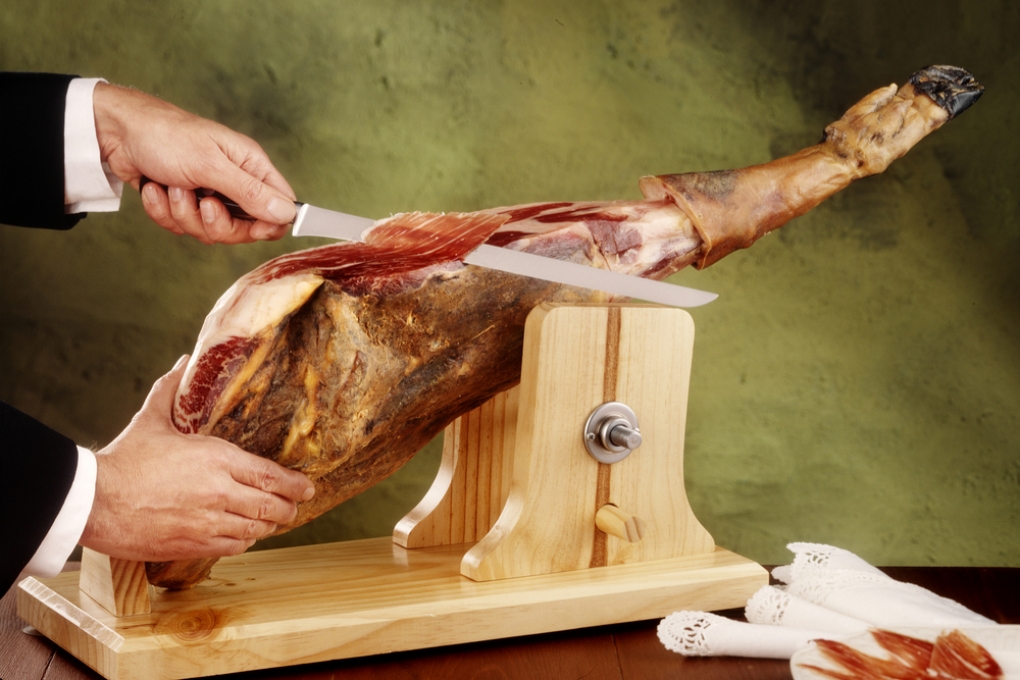
The story of Iberian ham begins with the Iberian pig, a breed native to Spain. These pigs are known for their diet of acorns, which gives the ham a distinctive nutty flavor. The meat is then cured for up to three years, resulting in a product that’s a feast for the senses.
The first thing you’ll notice about Iberian ham is its appearance. The meat has a deep red color, marbled with streaks of flavorful fat. This marbling is a sign of quality, a promise of the rich, savory taste that awaits.
But it’s the taste that truly sets Iberian ham apart. The meat is incredibly tender, melting in your mouth with a complexity of flavors. There’s the initial savory taste, followed by a sweet, nutty flavor, and finally, a lingering, satisfying aftertaste.

The aroma of Iberian ham is another of its charms. The long curing process gives it a deep, intense aroma that’s incredibly inviting. It’s a smell that’s hard to resist, a smell that promises a culinary delight.
When it comes to serving Iberian ham, less is more. It’s typically served in thin slices, allowing the warmth of your mouth to release its flavors. It’s a delicacy that’s meant to be savored slowly, enjoyed one slice at a time.
Iberian ham is more than just a food product. It’s a testament to Spain’s culinary heritage, a symbol of the country’s love for quality and flavor. From the care in raising the pigs to the skill in curing the ham, every step of the process is a labor of love.
With its unique flavor, enticing aroma, and rich heritage, it’s no wonder it’s a favorite among food lovers. Here’s to discovering the joys of Spanish cuisine!

